
How to organize your interior design services to attract premium clients
Frustrated that your website leads are less than an ideal fit for your business?
If you’ve been running your interior design business for a few years, you’ve probably learned which projects make you light up, and which ones… not so much. You know the kind of clients you love working with, and you’re ready to fill up your calendar with more of them.
But when it comes to showing up online, even the most talented designers can struggle to package their services in a way that truly attracts the right kind of clients.
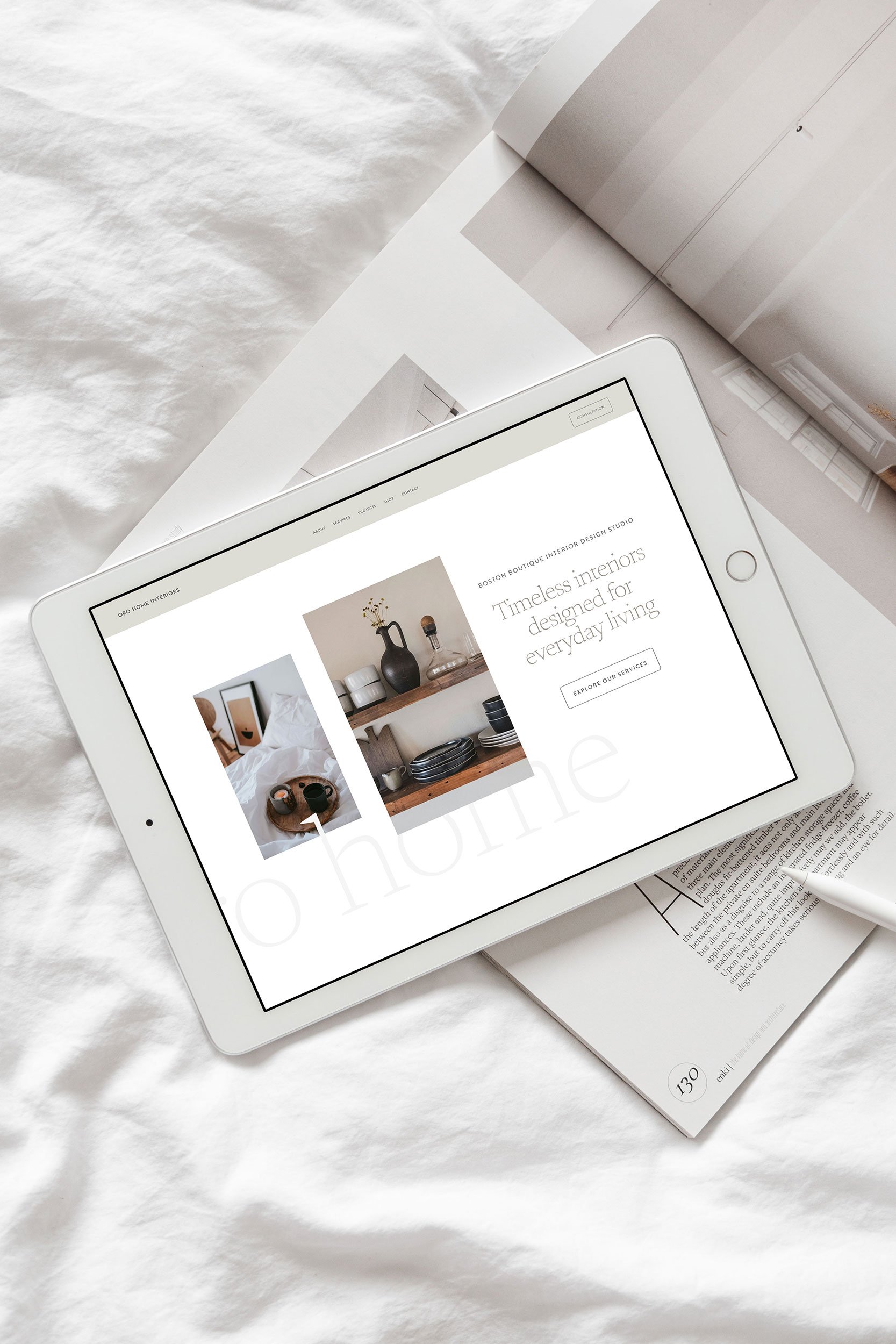
Your website can help you do exactly that, but only if your service offerings are structured in a way that makes it easy for dream clients to see themselves working with you.
One of the key elements of that? How your services are organized and presented on your website.
Here are some tips on structuring your service offerings so your website becomes a natural magnet for the clients you really want to work with, not just a pretty brochure.

1. Lead with your signature service
Start with the project type that brings you the most joy and profit. Whether that’s full-home design, renovation support, or turn-key styling, this is your Signature Service — the one you want to be known for.
By featuring it first on your services page, you’re not just listing what you offer — you’re positioning yourself as an expert in your specialty.
Give your signature service a name that feels uniquely yours.
For example, “The Full-Home Design Experience” or “The Modern Makeover Package” sounds a lot more inviting than “Full-Service Design.”
2. Create a clear, tiered structure
Once your main service takes the spotlight, organize the rest in a simple, logical flow. Think of it like a menu where each option has its place:
Signature Service: Your premium, full-scope offering
Supporting Services: Smaller or more flexible options (design consultations, room refreshes, e-design, etc.)
Add-Ons or Extras: Optional upgrades like sourcing assistance, custom furnishings, or styling days
This structure helps clients quickly understand their options and gives them an easy way to step into working with you, even if they’re not ready for a full project yet.
3. Focus on client outcomes, not includes
It’s easy to fall into “designer speak” when describing what’s included — space planning, renderings, sourcing, etc. But most clients care more about how it helps them.
Try shifting from technical details to transformation-driven language.
Instead of:
Includes a detailed floor plan, concept board, and 3D renderings.
You could perhaps say:
You’ll receive a complete design plan that helps you visualize your space with confidence before making any big decisions.
You’re still communicating value, but in a way that connects emotionally.
4. Add a “Who It’s For” section
This is one of the simplest ways to attract (and pre-qualify) your ideal clients. Under each service, include a short note that explains who it's perfect for.
For example:
Perfect for: Busy homeowners who want a hands-off experience and trust your expertise to bring their vision to life.
When visitors read that and think, “That’s me!”, you’ve just made the connection feel effortless.
5. Guide visitors toward the next step
Each service section should end with a clear, friendly call to action — whether that’s scheduling a discovery call, filling out an inquiry form, or downloading your pricing guide.
Ready to start your project? Let’s chat! Click to schedule your complimentary discovery call.
When you guide people through your site with clarity and confidence, it builds trust — and removes hesitation.
6. Keep it focused and intentional
Don’t feel pressured to list every possible service you could do. That’s often overwhelming to a potential client, and they likely won’t fully understand the details if they’ve never worked with an interior designer before.
The goal isn’t to show how much you can handle — it’s to highlight the type of work you want more of.
Three to five well-defined offerings are usually perfect. Each one should support your business goals and lead to the kinds of projects that make your heart (and your bank account) happy.
In short…
Your website isn’t just there to look beautiful. It’s a tool to help you attract premium clients and streamline your business.
When your services are organized clearly, described in client-centered language, and supported by a confident call to action, your site starts doing the heavy marketing-lifting for you.
At Porta Blu Design, this is one of the most powerful shifts we help designers make. Through strategic website design and messaging, we transform your services page from a simple list into a conversion-focused experience that connects with your ideal clients and brings in the kinds of projects you’re most excited about.
